
Jewelry Care Guide
Julia’s work is driven by a continuous exploration of materials, from precious metals and stones, to steel, wood, enamel, and industrial paint.
This experimental, material-driven approach is what makes her work unique, and caring well for your pieces will help keep them beautiful for years to come. This page aims to provide general information about how best to care for your jewelry, but if you have any specific questions, feel free to reach out to the studio at hello@juliaturner.com.
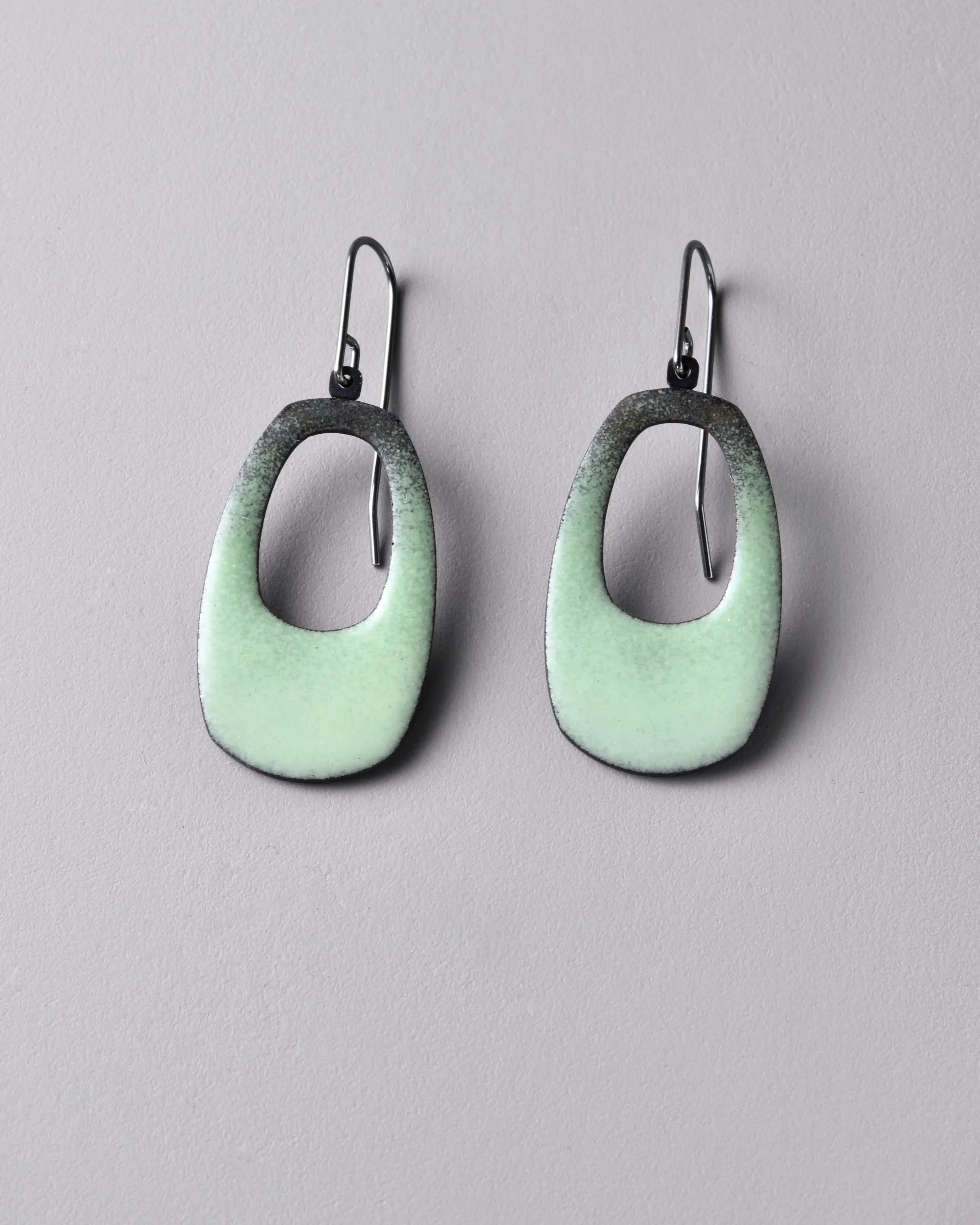
Enameled Steel
-
The rich, colorful surfaces on our enameled steel pieces are created by sifting layers of powdered, pigmented glass onto steel forms, which are then fired in a kiln at high temperature, allowing the glass (enamel) to liquefy and cool into a glossy sheet.
-
How should I care for the enameled steel? Although steel is tough and durable, the enamel itself is a wearable piece of glass and should be treated as such. Avoid putting pressure on the surface or letting pieces drop on hard surfaces, as the enamel may crack or chip. Please pack your enameled jewelry carefully when traveling. The steel is sealed with a tough protective acrylic coating, but abrasion may remove it and expose the metal, so please keep your steel pieces away from water — especially salt water.
How should I care for the oxidized sterling silver elements? The oxidized sterling silver earwires or Hive necklace chains can be wiped clean with a soft cloth. The dark oxide may wear off over time, revealing the bright silver underneath. Please do not use any polishing pastes or tarnish-removing dips on the silver elements, as they may damage enameled steel or remove the oxide layer.
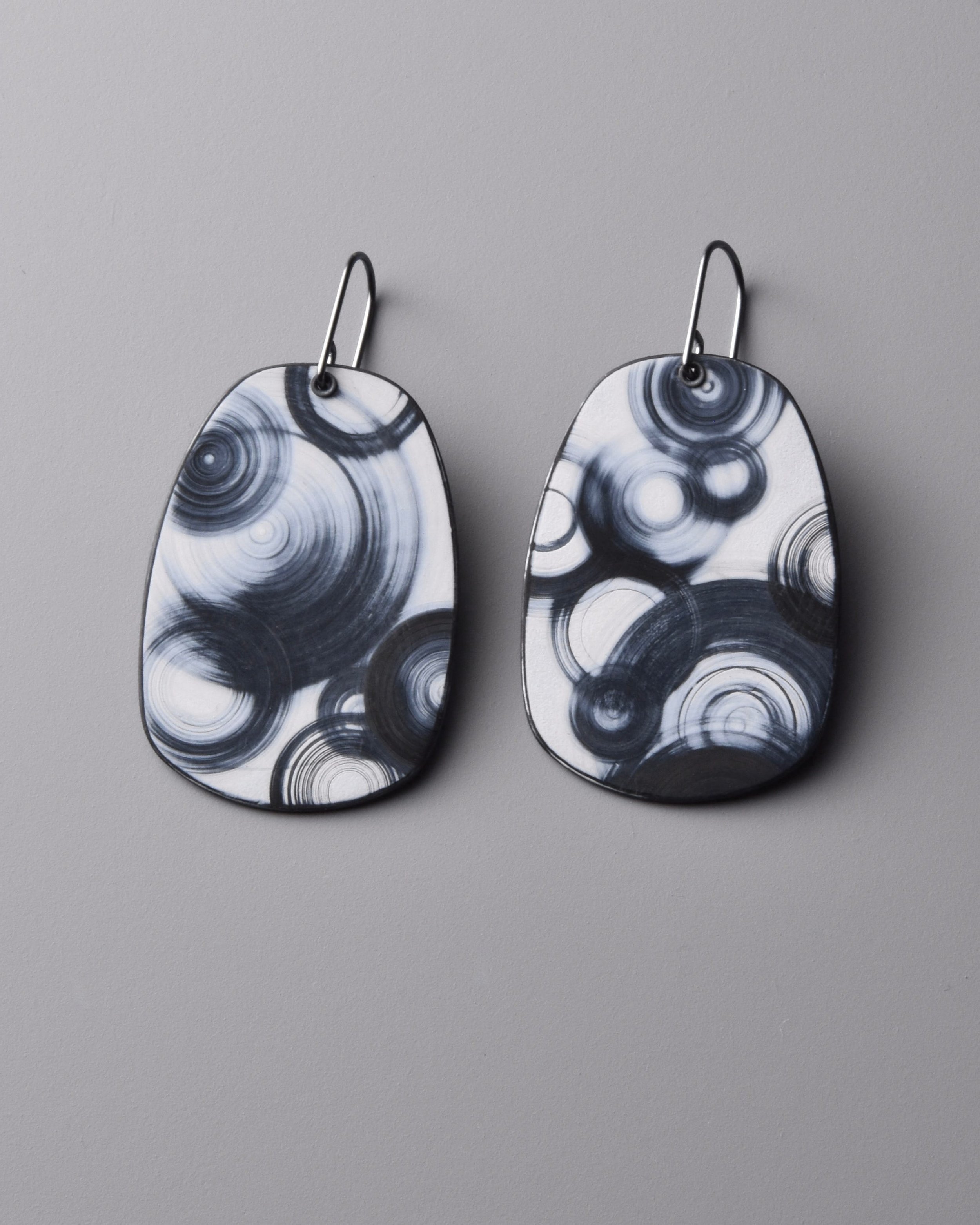
Powder-Coated Steel
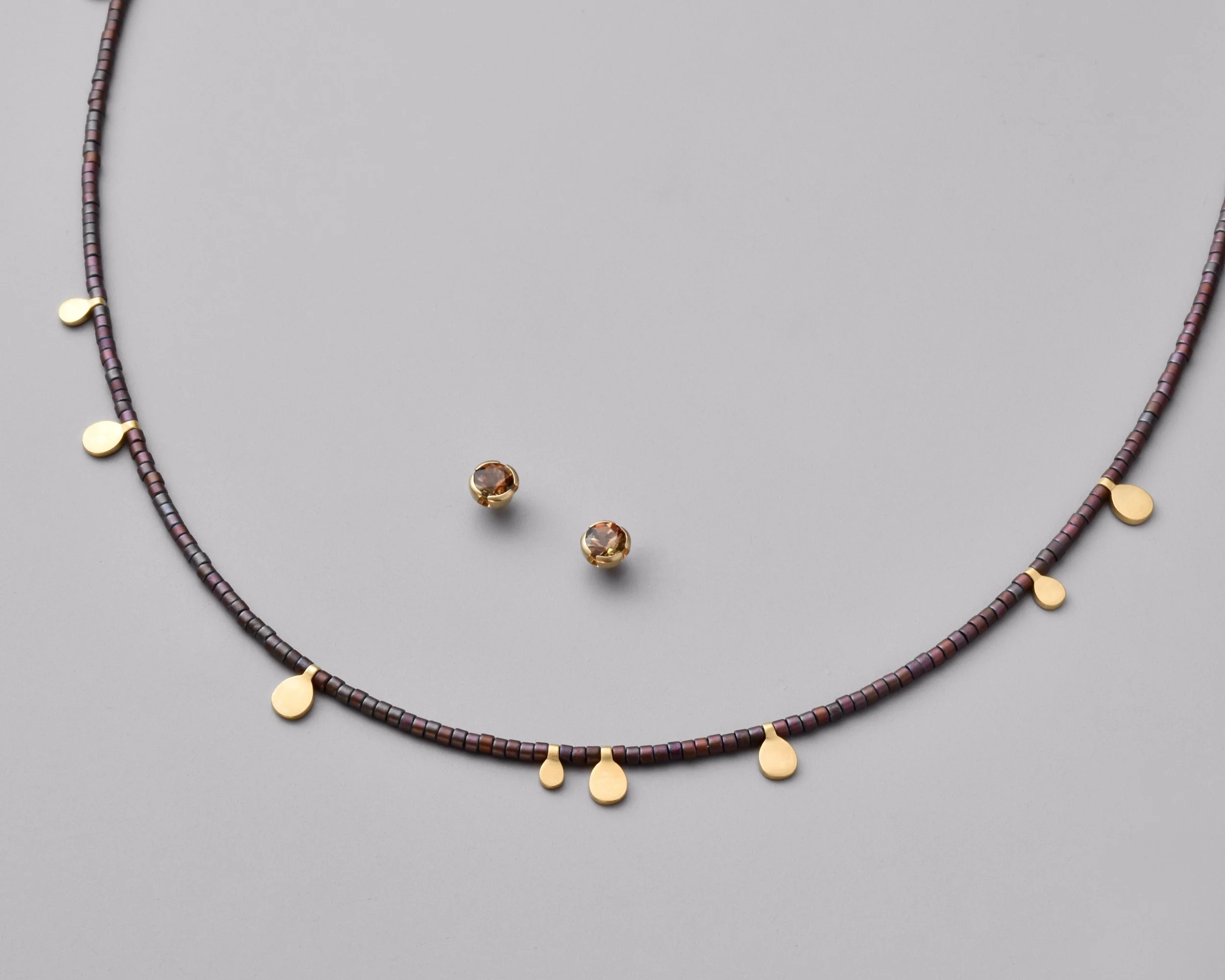
Gold
-
All of our precious metal findings are solid sterling silver, 14k or 18k gold. None of our jewelry is plated.
In jewelry-making, pure gold is frequently mixed with silver and copper to create a variety of alloys with varied durability, color, and price.
-
Gold jewelry can be wiped clean with a soft cloth or lightly shined with a polishing cloth.
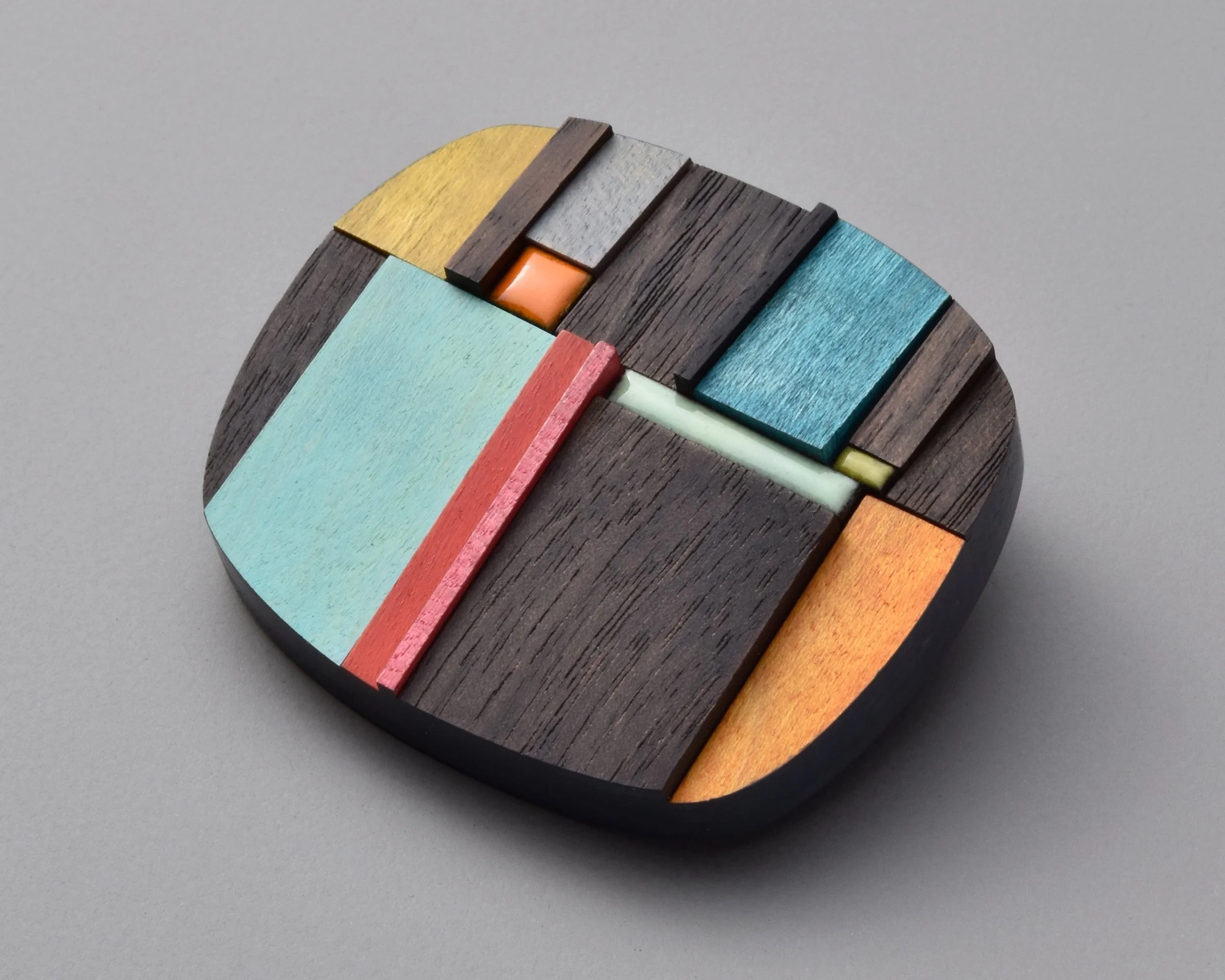
Wood
-
Our colorful wood pieces are made primarily from domestic hardwoods, using a combination of salvaged and sustainably harvested wood.
We use walnut in shades from medium brown to almost charcoal, depending on whether we've left its natural color or ebonized it (using iron acetate to turn the natural tannins black).
For the brightly colored elements, we use maple, which has a pale tone that takes color beautifully. Color is achieved by layering thin coats of acrylic ink as a stain, so the wood grain still shows through.
For some pieces, we use thin sheets of birch or aspen veneer to build up depth and surface texture, also stained with acrylic ink to let the natural grain show through.
-
Care
How should I care for my wood jewelry? All of our wood is sealed with danish oil, wax, or UV-protective varnish. So, while it will survive a surprise drizzle, to keep it looking its best please wear it gently, keep it away from direct contact with liquids, and avoid storing it in direct sunlight. Please remove all wood jewelry before showering or swimming. For pieces that combine wood, sterling silver, and glass beads, wipe the glass beads clean with a soft, dry cloth.
How should I care for the oxidized sterling silver elements? Wipe clean with a soft cloth. The dark oxide may wear off over time, revealing the bright silver underneath. Please do not use any polishing pastes or tarnish-removing dips on the silver elements, as they may damage the wood or remove the oxide layer.
Bronze
-
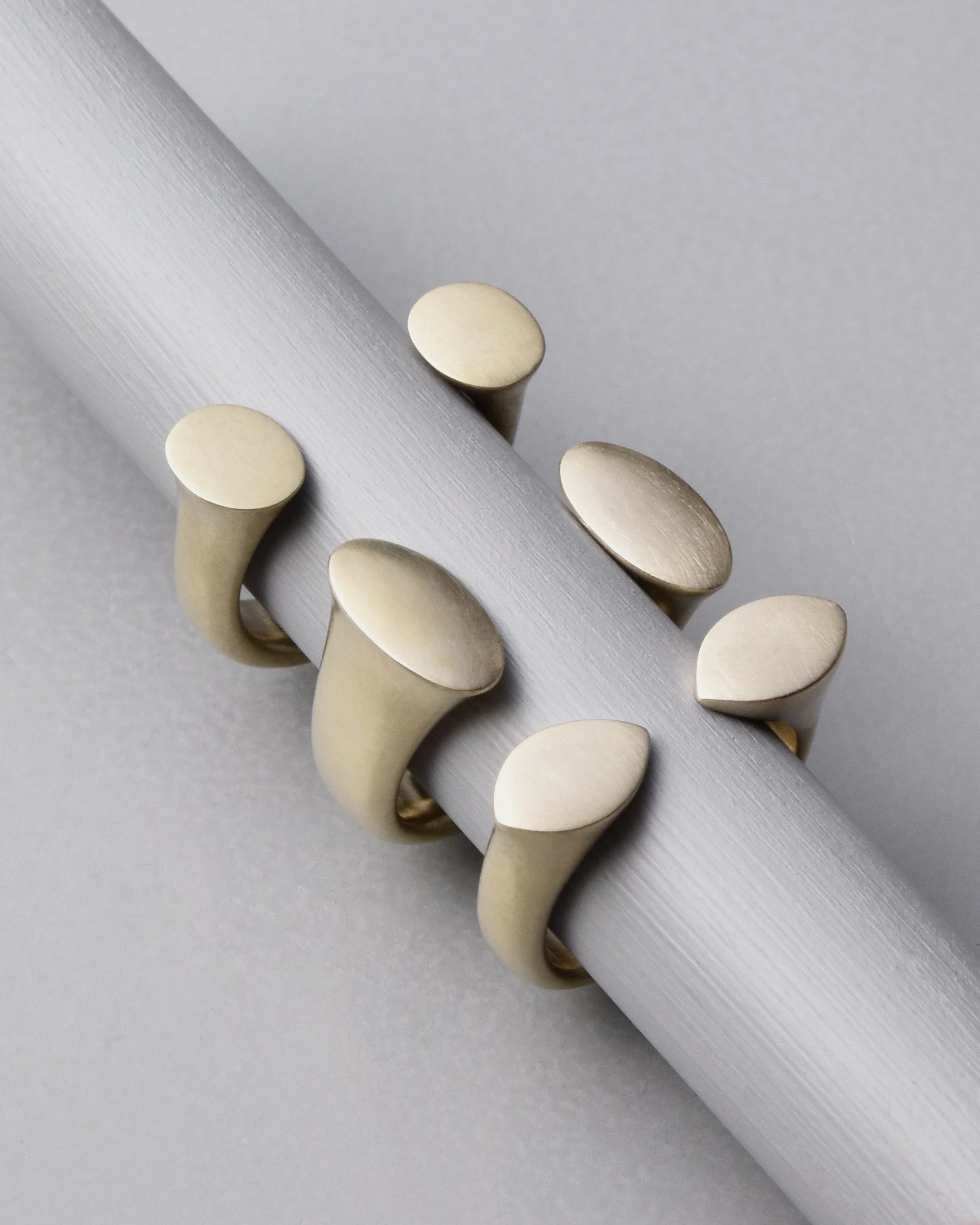
The bronze we use to cast our rings is a yellow bronze alloy of copper, zinc, and tin, commonly used in jewelry-making for its bright, warm tone, which pairs well with gold and silver pieces.
A Note About Bronze: Each of us has a slightly different skin chemistry, and bronze is more reactive than silver or gold. You may find that the bronze causes a slight discoloration of your skin on the inside of your hand when you first start wearing the ring. We’ve found that to lessen with time, and it’s not bothersome… unless it is! We want you to be comfortable and happy wearing these, so if it’s not working out, please let us know!
-
With wear, bronze jewelry may develop a warm, personalized patina — a natural deepening of color and character that we often find ourselves loving as much as the piece itself! But if you’d like to give your piece just a little extra shine, your bronze jewelry can be wiped clean with a soft cloth or lightly buffed with a polishing cloth.
Beads
-
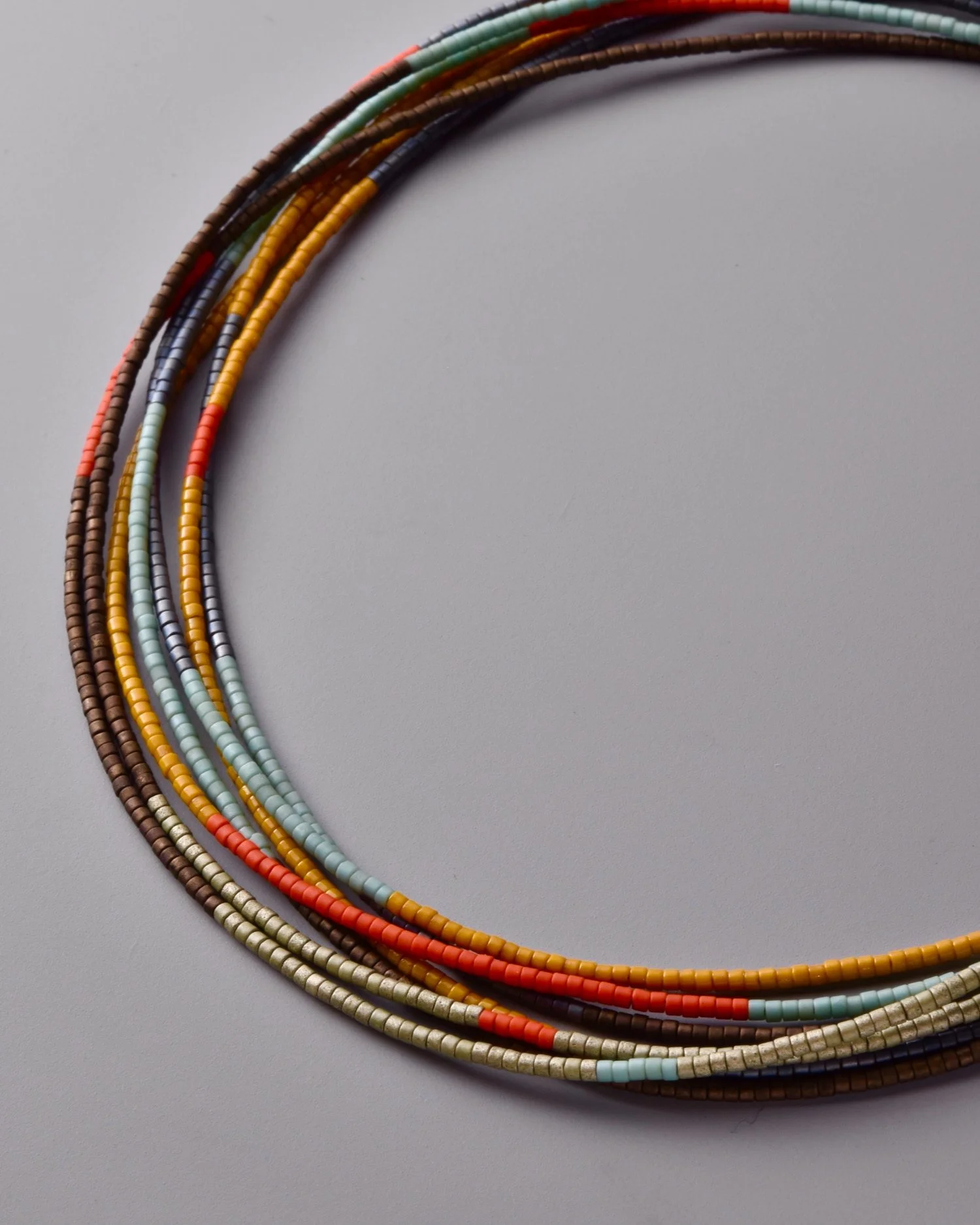
Our beaded necklaces are made from tiny Japanese Miyuki delica glass beads, hand-strung on a flexible nylon-coated stainless steel cable for a beautiful drape.
The cable's thin nylon coating makes it impervious to rust, tangling, and kinking, and should give you years of wear. Do take your necklace off before showering or swimming, though — with exposure to water, the magnets in the clasp may begin to rust.
The magnetic Sweep necklace clasp is made by hand in our studio using neodymium magnets. Please keep any jewelry containing magnets out of the hands of children.
-
How should I clean the glass beads? If the beads on your Sweep necklace are getting dingy, the best way to clean them is with warm water, dish soap, and a toothbrush. Everything but the clasp can be safely submerged as if you were washing dishes; the clasp can be brushed with soap and rinsed with water, as long as it's thoroughly dried with a warm hairdryer.
How should I clean the clasp? Neodymium magnets are small but strong and won't lose their pull. If you notice that your clasp isn't staying closed as well as it used to — and both magnets still look intact and not rusted — it may need some cleaning. Dust and gunk can build up inside the clasp tube and prevent the magnets from meeting, making it feel as if the magnets have stopped working. We've found that the best way to clean the magnets is to pull open the clasp and use a toothpick or piece of tape to dislodge any dust. A gumdrop-sized piece of "blu tack" poster putty works especially well for loosely lodged debris. If that's not the issue, just let us know and we'd be happy to repair the clasp!
How should I care for the cable? If your necklace sits for a long time in one position, it may show a residual curve when worn long. A quick pass through the steam from a clothing steamer or kettle (please don't burn yourself!) will allow it to relax and hang straight.
-
How should I clean the glass beads? If the glass beads are getting dingy, you can clean them with warm water, dish soap, and a toothbrush. The necklace can be safely submerged as if you were washing dishes, brushed with soap, and rinsed with water, as long as it's thoroughly dried with a warm hairdryer.
How do I use the bayonet clasp? Our beaded precious metal necklaces are fitted with a secure spring-locking clasp. We suggest practicing opening and closing it a couple of times before heading out in your new piece!
To close: turn the plug side to find the entry point into the socket, push it in, rotate the two sides away from each other clockwise, and release. You'll feel the sides spring apart slightly; the tiny gap that appears indicates the clasp is locked.
To open: push the two halves together, rotate the two sides away from each other counterclockwise, and release.
Please click here for an instructional video.
How should I care for the bayonet clasp? Please take your necklace off before showering or swimming — with extended exposure to water, the spring in the clasp may begin to rust.
How should I care for the bright sterling silver beads or droplets? Wipe clean with a soft cloth. Please do not use polishing pastes or tarnish-removing dips on the silver elements — they may damage the glass beads.
How should I care for the oxidized sterling silver beads or droplets? Wipe clean with a soft cloth. The dark oxide may wear off over time, revealing the bright silver underneath. Please do not use any chemicals or abrasives — polishing pastes, tarnish-removing dips, or polishing cloths — on the oxidized silver elements, as they may damage the glass beads or remove the oxide layer.
How should I care for the gold beads or droplets? Wipe clean with a soft cloth. Please do not use polishing pastes on the gold elements — they may damage the glass beads.
How should I care for the cable? If your necklace sits for a long time in one position, it may show a residual curve when worn long. A quick pass through the steam from a clothing steamer or kettle (please don't burn yourself!) will allow it to relax and hang straight.
-
How should I care for the bright sterling silver elements? Wipe clean with a soft cloth. Please do not use polishing pastes or tarnish-removing dips on the silver elements — they may damage the glass beads.
How should I care for the oxidized sterling silver elements? Wipe clean with a soft cloth. The dark oxide may wear off over time, revealing the bright silver underneath. Please do not use any chemicals or abrasives — polishing pastes, tarnish-removing dips, or polishing cloths — on the oxidized silver elements, as they may damage the glass beads or remove the oxide layer.
A Note About the Tura and Gemma earrings: These earrings feature steel elements, so although the steel is sealed with a protective coating, please keep your earrings away from water, especially salt water, to prevent rust. The sterling silver elements can be wiped clean with a soft cloth.
Sterling Silver
-
All of our precious metal findings are solid sterling silver, 14k or 18k gold. None of our jewelry is plated.
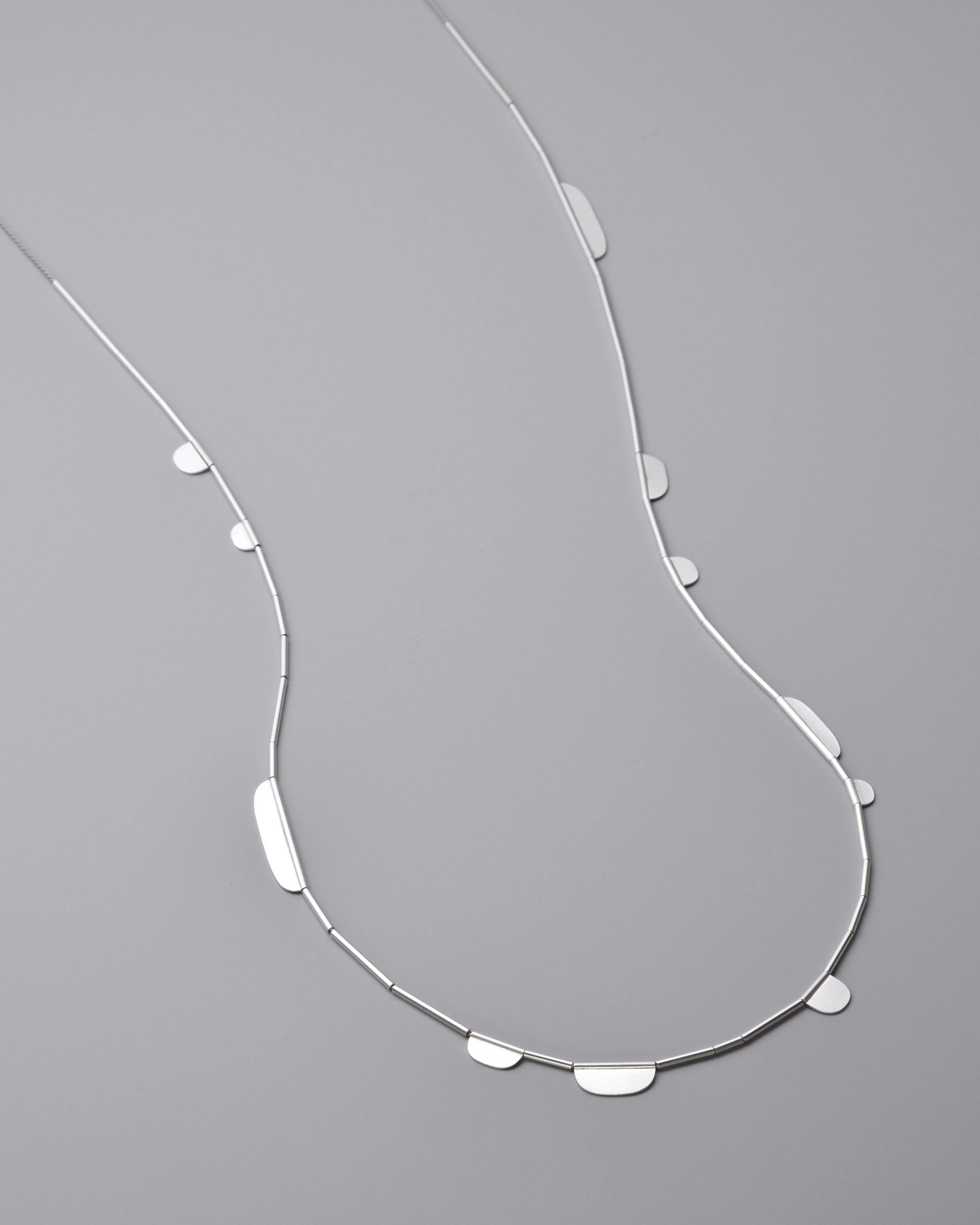
Sterling silver is an alloy of silver and copper commonly used in jewelry-making for its bright color and versatility. When exposed to moisture and air, sterling silver will gradually develop a layer of grey oxide called tarnish.
We often oxidize the silver to a beautiful gunmetal grey for contrast with our bright colors. If you can generally wear bright sterling without allergy issues, you'll have no trouble wearing the oxidized surface against your skin.
-
To clean bright silver, you can use anything from plain soap and water to baking soda on an old toothbrush.
If your bright sterling silver piece does not include other materials (such as glass beads, wood, or steel), it can be safely submerged as if you were washing dishes, brushed with soap, and rinsed with water, as long as it's thoroughly dried with a warm hairdryer. If it's heavily tarnished, it can be cleaned with a paste-type silver polish from the hardware store.
For bright sterling silver elements combined with other materials, wipe the silver clean with a soft cloth. Please do not use polishing pastes or tarnish-removing dips — they may damage the other materials.
-
Oxidized silver will slowly wear to its natural bright state over time, especially on exposed corners, but it can be re-oxidized easily. For questions about refurbishing, please reach out to us at hello@juliaturner.com.
Fun fact: wear your silver jewelry to a sulfurous hot spring and it will turn grey!
Oxidized sterling silver can be wiped clean with a soft cloth. If your oxidized piece needs a little more TLC — and does not include other materials such as glass beads, wood, or steel — it can be safely submerged as if you were washing dishes, brushed with soap, and rinsed with water, as long as it's thoroughly dried with a warm hairdryer. Please do not use any chemicals or abrasives — polishing pastes, tarnish-removing dips, or polishing cloths — on oxidized silver, as they may remove the oxide layer.
Silk Cord
-
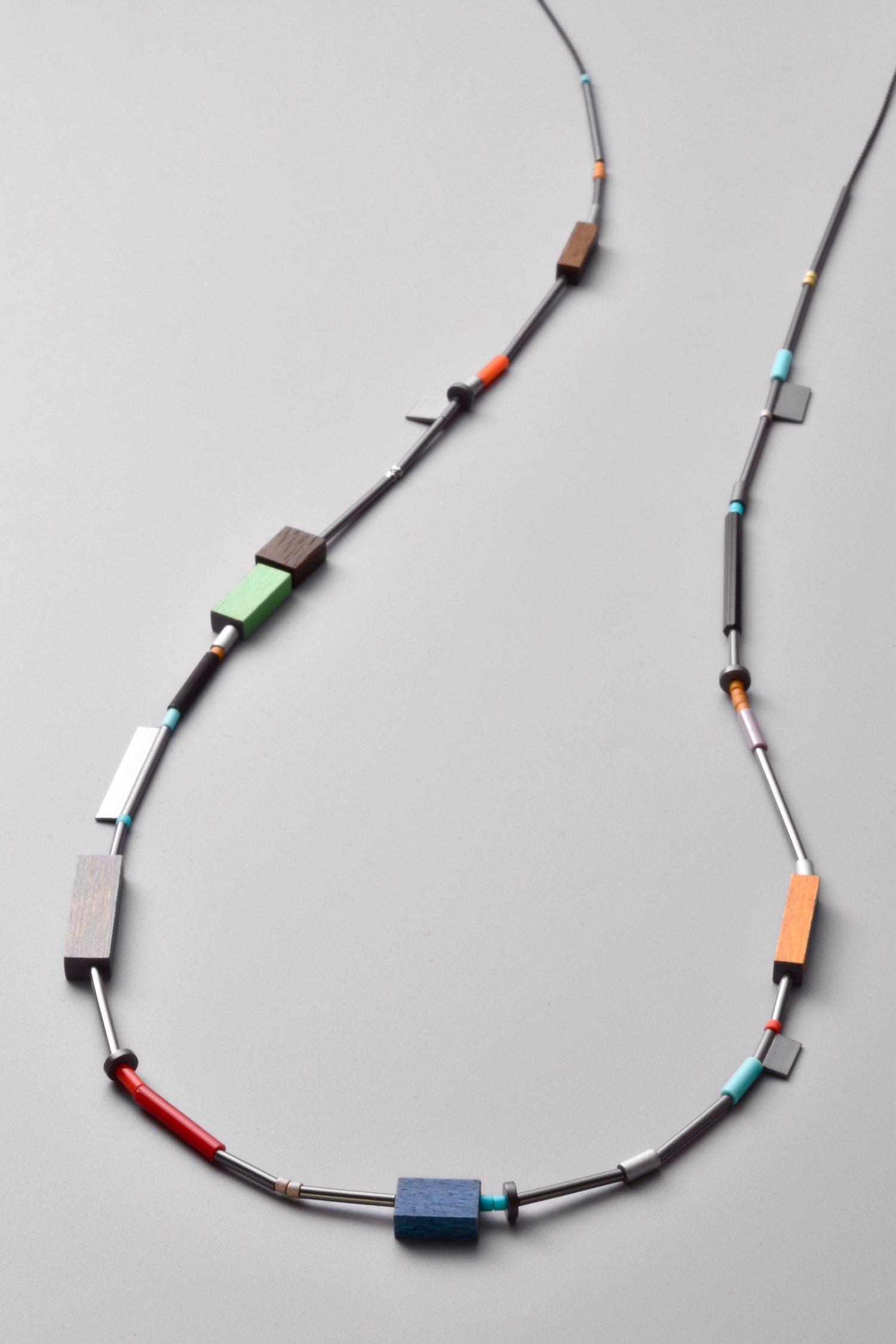
Some of our necklaces are made from glass, sterling silver, and wood beads, hand-strung on a natural silk cord for a delicate drape. Though soft, the silk cord is robust and resists fraying, providing many years of wear.
-
Please wear jewelry with natural silk cord lightly and keep out of contact with water. Do take your jewelry off before showering or swimming.
-
Our graphic powder-coated pieces begin as panels of steel with an industrial black powder-coat, finely sanded to a smooth finish. A layer of white enamel paint is applied to the black surface, and the graphic pattern is then scribed through the white to expose black lines beneath. Each earring is made by hand and no two are alike. These are finished with oxidized sterling silver findings.
-
How should I care for the powder-coated steel? The surfaces are sealed with a tough acrylic matte sealant, and no special care is needed beyond avoiding deep scratches on the white surface. If the surface becomes discolored by makeup or fingerprints, it can be cleaned with a little gentle soap on a cotton pad, then rinsed and dried well.
How should I care for the oxidized sterling silver elements? The oxidized sterling silver earwires can be wiped clean with a soft cloth. The dark oxide may wear off over time, revealing the bright silver underneath. Please do not use any polishing pastes or tarnish-removing dips on the silver elements, as they may damage the steel or remove the oxide layer.